
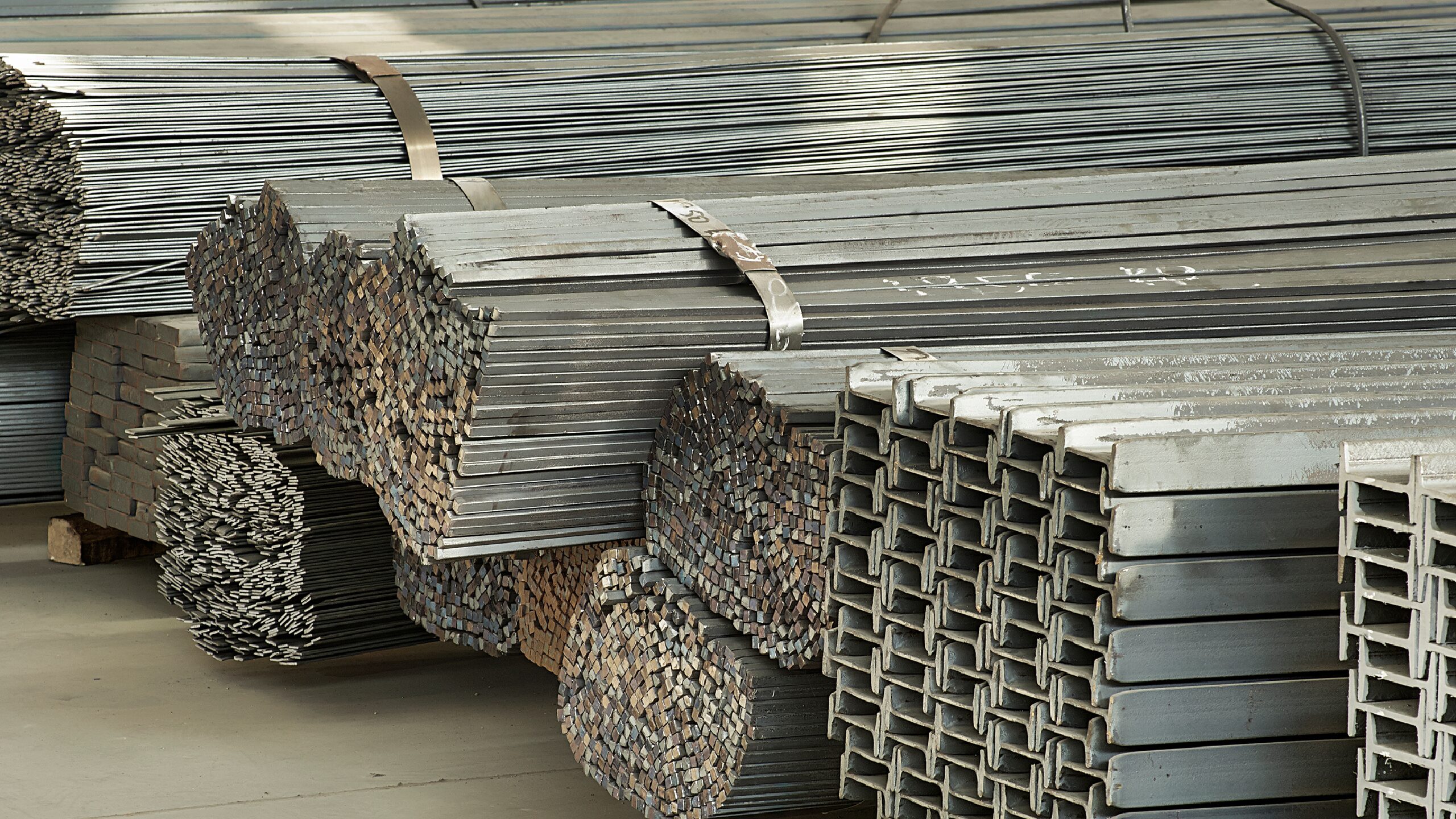
Steel and iron making account for around 7–9% of global CO₂ emissions — making it one of the hardest industrial sectors to decarbonise.¹ For Australia, the stakes are especially high. Iron ore is our single largest goods export — over 25% of the total — and 80–85% of it goes to China.² Australia is therefore more exposed to Chinese carbon policy than almost any other nation on earth.
And that policy is moving fast.
China has pledged to peak its CO₂ emissions before 2030 and achieve carbon neutrality before 2060. Its steel industry is expected to peak emissions in the same window — not because of market pressure, but because the Chinese state is creating market signals, not waiting for them.³ China launched its national Emissions Trading System in July 2021. The steel sector is expected to join soon.³ On 2 December 2025, Australia and China formalised this trajectory by signing an MoU to advance steel decarbonisation.
The decarbonisation pathway for steel runs squarely through hydrogen.
The most promising low-carbon steelmaking technology is Hydrogen Direct Reduced Iron (H₂-DRI) paired with an Electric Arc Furnace (EAF). In this process, green hydrogen replaces coking coal as the reducing agent, releasing water instead of CO₂. The hydrogen requirement is significant: 50–70 kg of H₂ per tonne of steel produced.⁴ Under a Net-Zero scenario for China’s steel industry alone, hydrogen demand in that sector is projected to reach 0.6 Mt/year by 2030, 5 Mt/year by 2040, and 6 Mt/year by 2050.⁵ China’s largest steel companies — Baowu, HBIS, Jianlong — are already building H₂-DRI pilot and demonstration plants.⁵
This creates an enormous, concentrated, and growing demand for green hydrogen.
But here’s the problem that the steel industry shares with the food (fertiliser) and energy sectors we discussed in earlier posts: the shift from fossil-fuel hydrogen to green electrolytic hydrogen dramatically increases the need for bulk hydrogen storage.
Today’s blast furnace operations are largely self-contained — coal and coke arrive by ship and rail and are consumed continuously. Green hydrogen steel plants will be different. Electrolytic hydrogen production is intermittent, tied to renewable energy availability. H₂-DRI plants will require large hydrogen buffers to keep operating when wind drops or clouds arrive. Where hydrogen is produced remotely — in the solar- and wind-rich regions of Inner Mongolia, Xinjiang, or Shanxi where ~70% of China’s announced hydrogen production capacity is concentrated⁵ — and transported to coastal steel plants, further storage will be required at both ends of the supply chain.
The Net-Zero Roadmap for China’s Steel Industry (Lawrence Berkeley National Laboratory / Global Efficiency Intelligence, 2023) explicitly identifies the coordinated development of hydrogen production, storage, transportation, and utilisation as central to China’s Hydrogen Industry Development Mid-Long Term Plan.⁵ Green hydrogen cost in China is expected to fall from ~USD $3–6/kg today to under USD $1.50/kg by 2050 as renewable capacity scales.⁵ As that cost falls, steel decarbonisation becomes not just technically viable but economically compelling — and the volumes of hydrogen required will be immense.
If we hope that China will move slowly because it has a young fleet of blast furnaces, we are misreading how China operates. It doesn’t wait for market signals. It builds them. The recommendation of the Net-Zero Roadmap is unambiguous: discourage any new blast furnace installations, encourage relining BFs as little as possible, and shift capital toward H₂-DRI.⁵ Relining a blast furnace can cost as much as building a new DRI plant — and locks in 15+ years of high-carbon emissions, creating stranded assets incompatible with China’s carbon neutrality goals.⁵
When Chinese steel decarbonisation accelerates — and it will — Australia will either be ready with green iron and the hydrogen infrastructure to supply it, or we will not. Being ready means investing now: in green ironmaking, in renewable hydrogen production, and critically, in scalable, affordable hydrogen storage.
The challenge with hydrogen storage is well understood. Compressed hydrogen storage is expensive — the container cost itself makes large-scale inventory management prohibitive. This is why, across food, steel, and energy supply chains, the emergence of a safe, low-cost bulk storage technology is not a marginal improvement. It is a prerequisite for resilience.
Hydrilyte® is that technology. It is a safe, pumpable hydrogen storage medium that allows storage capacity to be scaled with only a marginal increase in CAPEX. For green iron producers, hydrogen exporters, and the supply chains that connect them, Hydrilyte® offers what no incumbent technology can: the ability to hold large hydrogen inventories affordably — buffering against production variability, transport interruptions, and demand surges — without the cost penalties that have, until now, made bulk hydrogen storage impractical.
An investment in Hydrilyte® is an investment in the infrastructure layer that makes the entire green hydrogen economy resilient.